Part 4 of 4
Letting Smart Tempo Find the Song First
The drummer plays the idea; Logic can worry about the numbers afterwards.
As a self-taught drummer, tempo has always been slightly annoying. I have tried to lock things to a number, manually find it, and make myself play to a click. The trouble is that I am not a machine on the click. I play by feel. Sometimes a metronome helps; sometimes it makes me feel as if the beat has been appointed by committee before the groove has had a chance to arrive.
Let the first performance lead
Smart Tempo offers a much kinder way in. With a MIDI drum kit, I can play the idea first. I may move in and out of time a little, but the performance usually has a clear overall feel. Rather than flattening that with heavy quantising, Logic can help capture the tempo of what was actually played and turn it into something usable while keeping the human part intact.
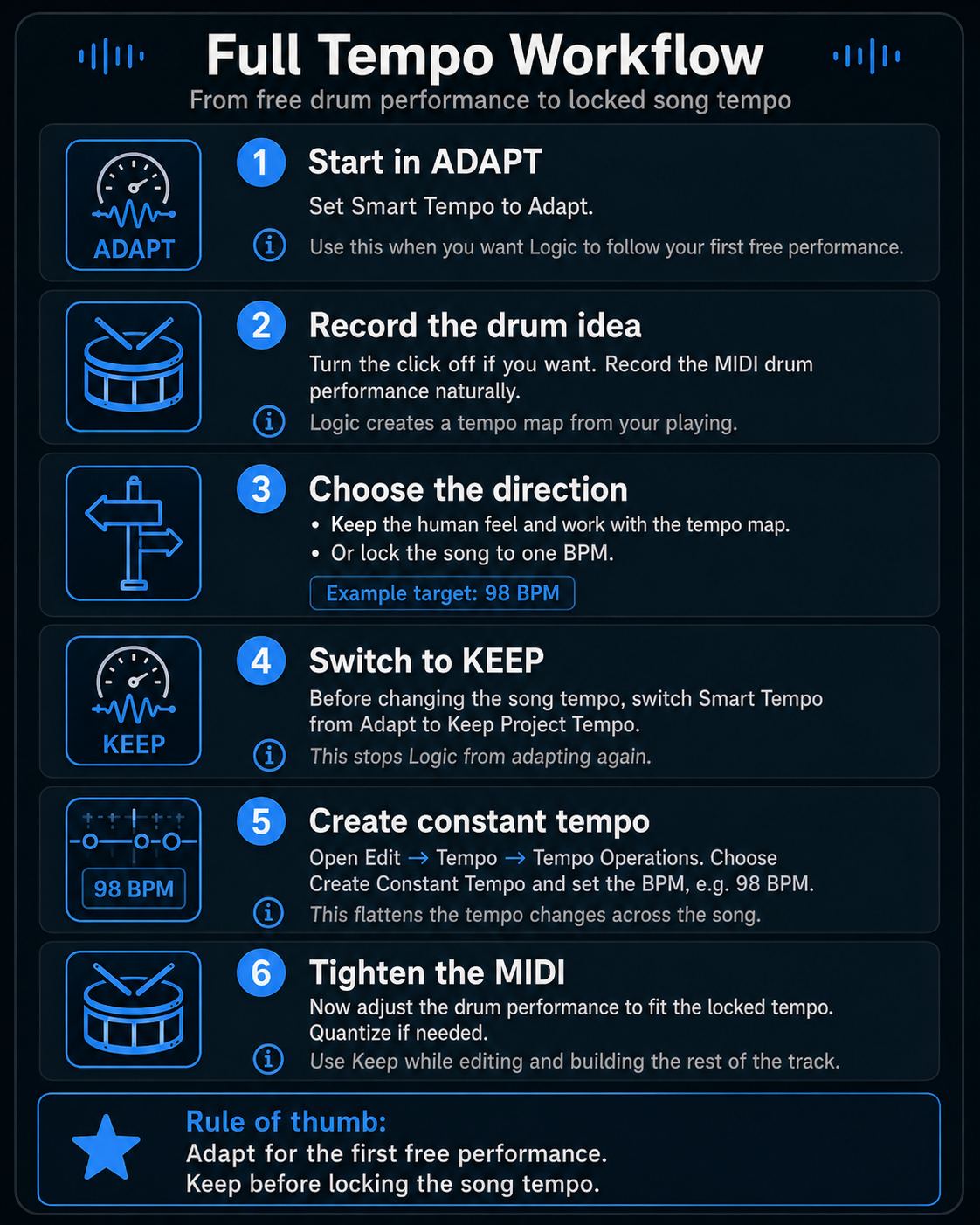
The useful distinction is that this is not about avoiding a tempo forever. Once the idea exists, I can choose whether to keep its human tempo map or settle the song on one BPM and tighten the MIDI where it needs it. The order matters. The groove gets to say what it is before a number gets to take over.
That changes the feel of starting a song. I do not have to choose a tempo before the groove exists; I can find the beat first, then give the project enough structure to build around it. It is a small technical feature with a very drummer-shaped emotional benefit.
An audio workshop, not a control-room fantasy
The studio is still small. The mixer is small, the interface is small, and none of it is pretending to be a huge professional control room. But it now behaves like a smart little control room—or better, an audio workshop. It is ready for a guitar, a jam, a friend, a drum idea, a sample, and the slightly imperfect first take that might turn into a song.